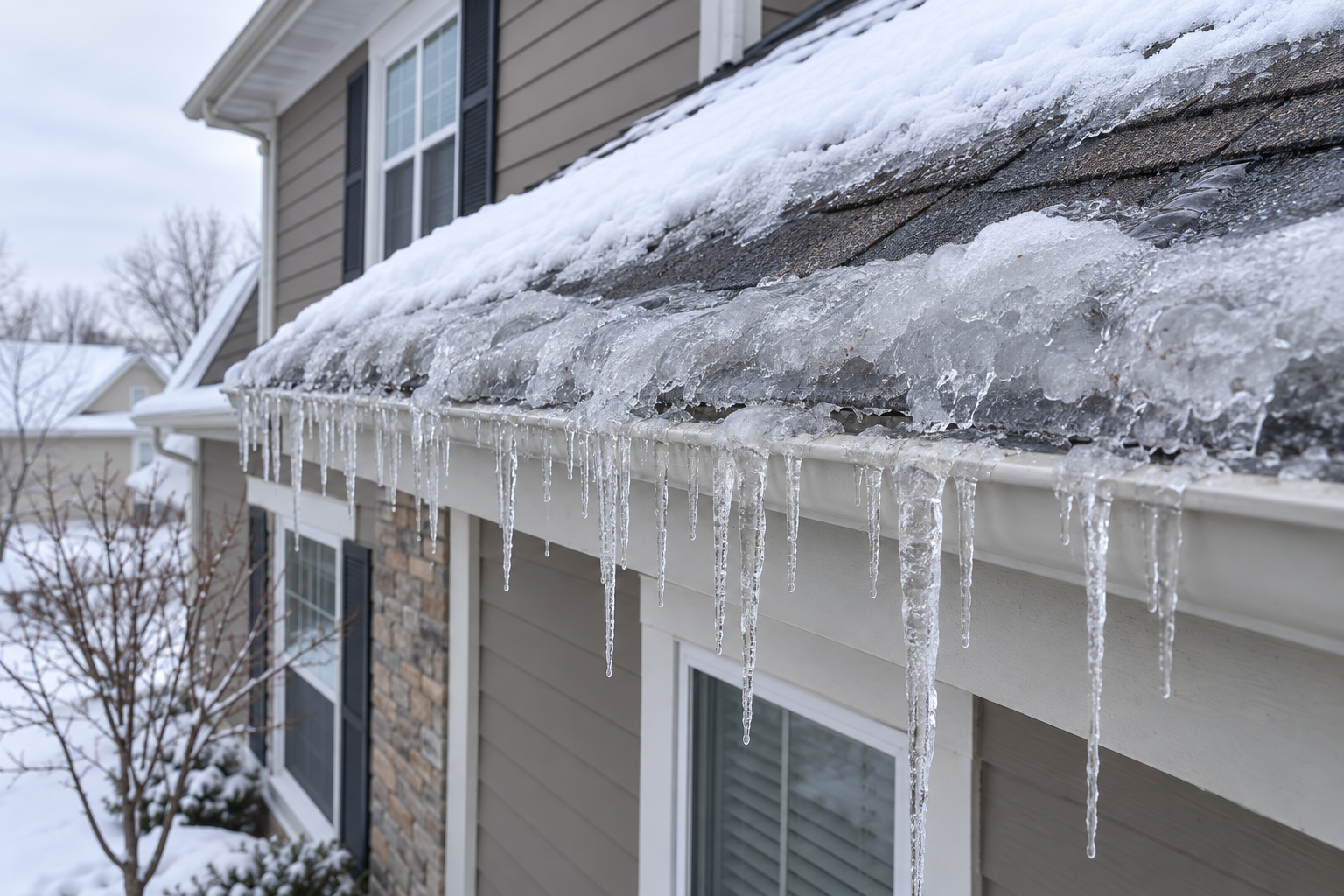
Thick ridge of ice along the eave of a snow-covered shingle roof, with icicles hanging over the gutter

Ice dam guide

Ice Dams: Why They Form and How a Roof Stops Them

An ice dam forms when snow melts on the upper roof and freezes again at the cold eave, and the water caught behind it backs up under the shingles. Here is why it happens, what to do when you see one, and the parts of a roof that stop it.

Monday to Saturday, from first thing in the morning until six in the evening. Calls outside those hours go to voicemail and we return them the next working morning.

Ice at Your Eaves?

One call gets the eaves, the attic and the vents looked at, and the whole job quoted before any work starts.

(208) 858-8078 Call for a Free Estimate
  • Licensed and insured
  • No surprise charges

Where it starts

What an Ice Dam Is

An "ice dam" is a ridge of ice along the roof edge, built when snow melts higher up the roof and the water freezes again at the cold eave.

Heat rising out of the house warms the roof deck over the attic, so the snow on that part of the roof melts even on a freezing day. The meltwater runs down the shingles until it reaches the eave, the part of the roof that hangs out past the wall with no warm attic under it, and there it freezes. Each day of melt adds another layer, and the ridge grows into a dam.

The icicles over the gutter are the part you see from the yard. The part that does the damage is the ice on the roof itself, and the water pooled behind it.

How Ice Dams Cause Leaks

Water pools behind the ice, backs up under the shingles and comes through into the ceiling.

A leak from an ice dam builds in three stages:

  1. Melt runs downSnow over the warm attic melts and runs toward the roof edge.
  2. Ice holds it backThe frozen ridge at the cold eave stops the water, and it pools on the roof behind the ice.
  3. Water backs up under the shinglesShingles shed water running downhill, not water standing on them, so the pool works up under the courses and into the insulation and ceiling below.

Damp insulation and drywall feed mold, and the U.S. EPA's guidance on mold puts controlling moisture first.
Built into the roof

How a Roof Stops Ice Dams

Ice and water shield at the eaves and valleys, insulation on the attic floor and balanced ventilation are what keep an ice dam from turning into a leak.

Those parts split the work. The "ice and water shield" handles the water once a dam has formed, while insulation and ventilation go after the cause, keeping the roof deck cold enough that snow does not melt high and freeze low. The International Residential Code's chapter on roof assemblies sets the requirements residential roofs are built to, ice barriers and ventilation among them.

These are the four parts of a roof that stop an ice dam:

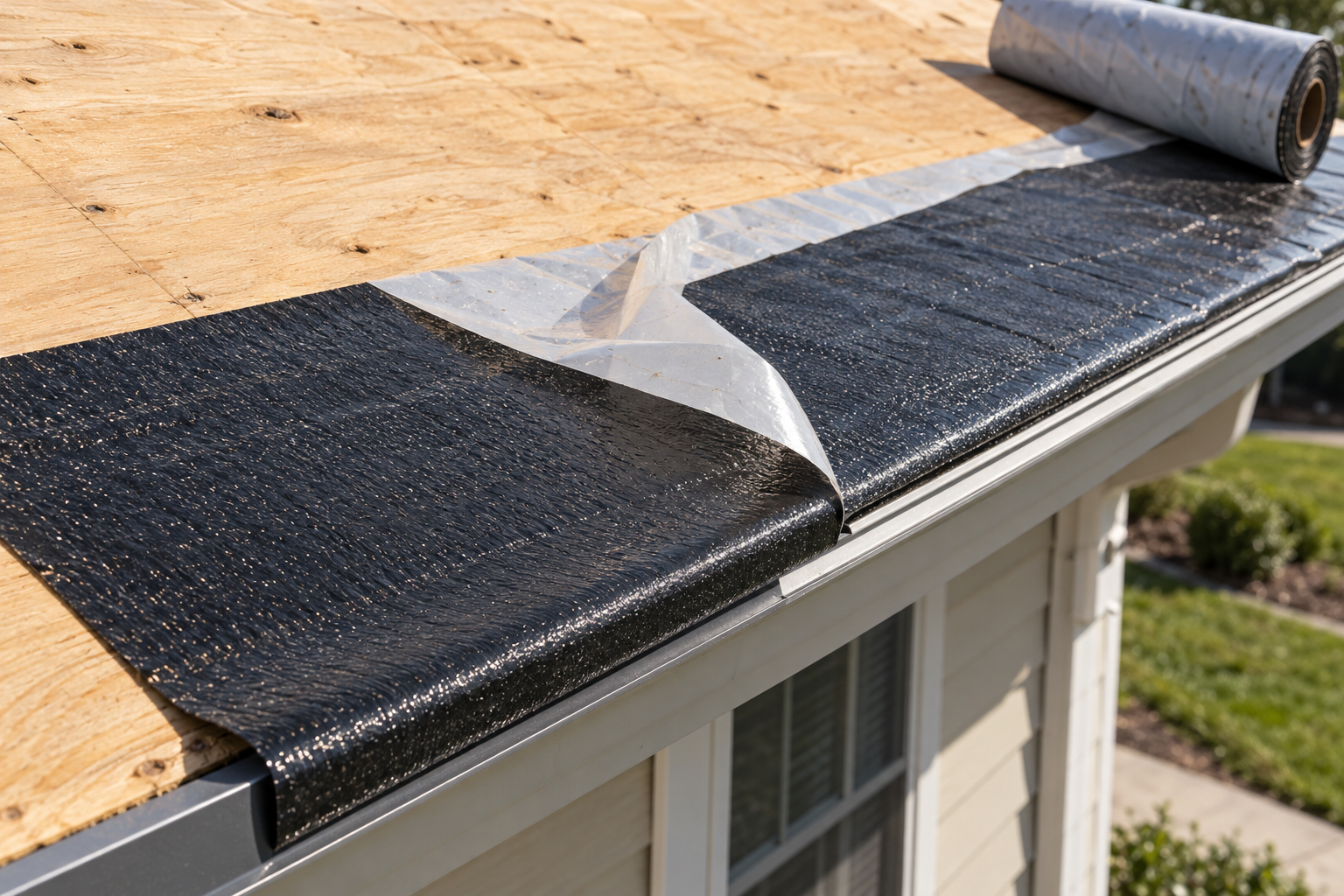
  • At the eaves and valleysIce and water shieldA self-adhering membrane under the shingles, so water the dam backs up meets a sealed layer instead of the roof deck.
  • On the attic floorInsulationKeeps the house's heat in the house, so the roof over the attic stays cold and the snow on it stays snow.
  • At the soffitsVentilationOutside air drawn in under the eaves and through the attic carries off the heat that does get past the insulation.
  • Along the ridgeRidge ventThe exhaust at the top of the roof. A "ridge vent" only works with "soffit intake" feeding it, so we check the two together.
Self-adhering ice and water shield membrane rolled out along the eave of a stripped roof deck, over the metal drip edge

On a new roof, all four go in

On a replacement we do a "tear-off" to the deck, lay synthetic underlayment over the whole roof, put ice and water shield at the eaves and valleys, replace the flashing and correct the ventilation. Correcting attic ventilation costs far less as part of a reroof than as a separate project later.

roof replacement

Ice on the roof right now

What to Do About an Ice Dam Now

You should stay off the roof and call a roofer, because a wet or icy roof is slippery and can give way under you.

Until we get there, keep to the ground and do this:

  • Stay off the roof and off any ladder leaned against an icy gutter.
  • Catch the drip with a bucket and towels, and move what you can out of its way.
  • Photograph the stain and the ice from the ground and from inside.
  • Call us and tell us where the water is showing.
Call Idahome Grown Roofing

We answer the phone or call back the same working day.

emergency roof repair

Heavy Snow on a Roof

Heavy snow overloads trusses, and a roof that sags under the weight needs attention.

A sag in the roofline points to one of three causes: trusses overloaded by snow, a failed rafter or a deck softened by moisture. Taking the weight off comes first, and for that we offer snow removal.

From a neighbor

In a neighbor's own words

Ice at the eaves or a dry winter, these are the promises we keep on every job.

  • Free, no-obligation estimates.
  • We show up when we say we will.
  • We clean up when the work is done.
Michael did a great job for us. Met him randomly because he bought something from me on FB Marketplace, and then we got talking. Soon enough we were walking around on my roof and he gave me a very competitive quote. He was super professional and the roof is done right. I feel lucky to have found him!
Matthew NelsonGoogle review

Before the next thaw

Ice at your eaves, or a stain on the ceiling?

Call and we will look at the eaves, the attic and the vents and find what is letting the dam form, so the fix goes after the cause and not only the ice.

Monday to Saturday, from first thing in the morning until six in the evening. Calls outside those hours go to voicemail and we return them the next working morning.

Call for a Free Estimate (208) 858-8078

We quote the whole job before we start, with no surprise charges after.

Call (208) 858-8078