Nails through the face
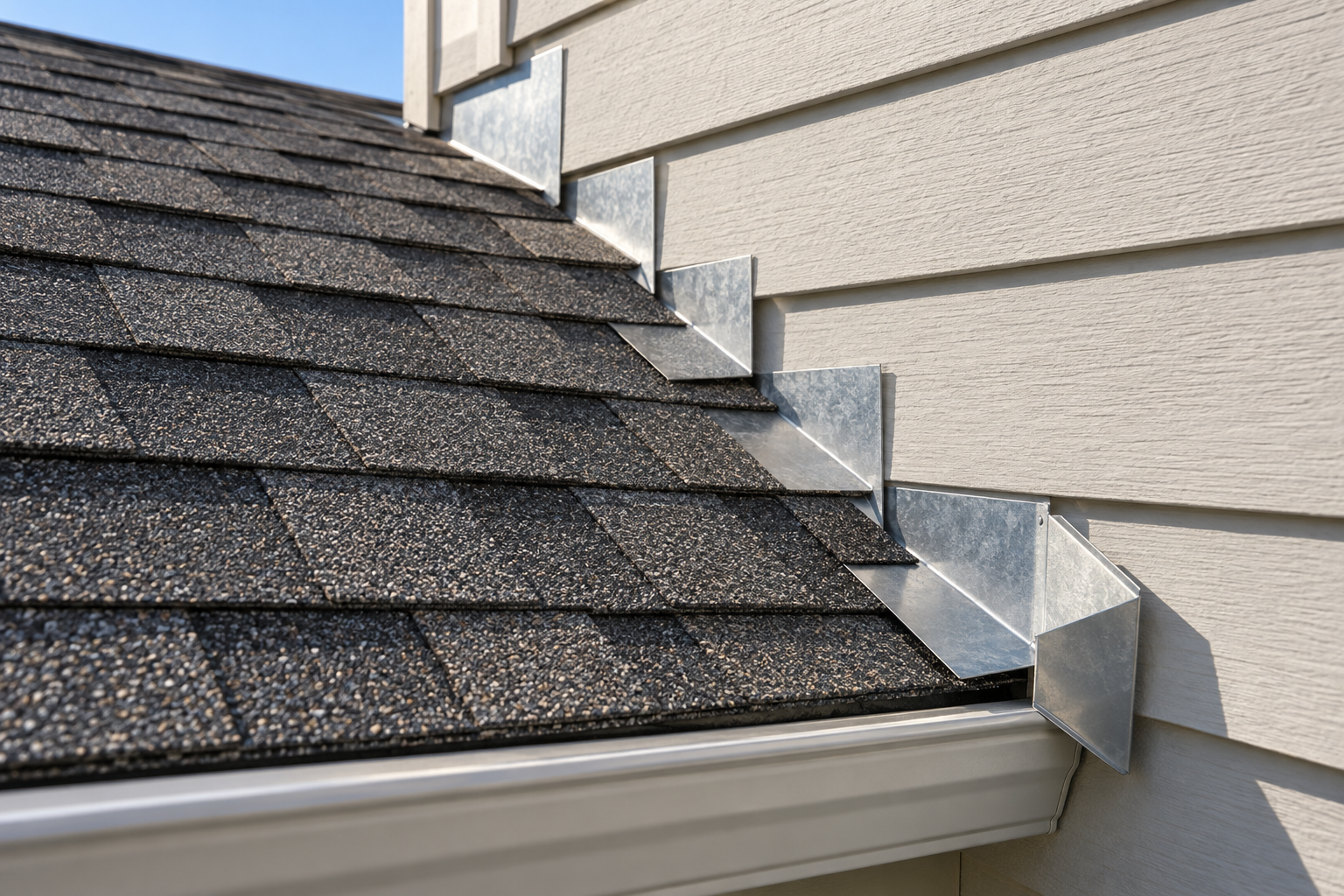
Step flashing is meant to be held by the shingles woven over it. Face-nailed, every nail is a hole sitting right where the water runs down the wall.
Roof flashing
Flashing is the metal wherever your roof meets a wall, a chimney, a vent, a skylight or a valley, and those joints are where most leaks start. Here is where each piece goes, why it fails and how we fix it.
Monday to Saturday, from first thing in the morning until six in the evening. Calls outside those hours go to voicemail and we return them the next working morning.
Leaking at a Wall or Vent?
One call sets a time to walk the roof and check the metal at every wall, valley, vent and chimney.
(208) 858-8078 Call for a Free EstimateThe short answer
Roof flashing is the metal that turns water away at the joints of a roof, wherever it meets a wall, a chimney, a vent, a skylight or a valley.
Shingles shed water well across an open slope. The trouble is every place the slope stops or something pokes through it, and that is the job of the "flashing": bent metal laid in with the roofing so water running down the roof is carried past the joint instead of into it.
Because most leaks start at those joints, the flashing is where careful work shows and where a rushed job gives itself away. The International Residential Code's chapter on roof assemblies counts flashing among the parts a home's roof is built to.
Piece by piece
A roof uses step and end-wall flashing at the walls, kick-out flashing at roof edges, W-valley metal in the valleys, pipe and gooseneck flashings at the vents, and drip edge along the eaves and rakes.
These are the kinds of flashing on a roof and where each one goes:
Along a wall
"Step flashing" is laid in piece by piece with each shingle course where the roof meets a wall, and end-wall flashing caps the spot where a slope stops against one.
Bottom of a wall run
Where a roof edge meets siding, a "kick-out flashing", sometimes called a diverter, turns water away from the wall and into the gutter.
In the valleys
A "valley" carries the water of two slopes at once, so we set W-valley metal in it for durability.
Around plumbing vents
A "pipe boot" is the rubber collar around a vent pipe, and it cracks and splits with age and sun. That split is how a vent that has been dry for years starts to drip.
Over exhaust vents
Old plastic vents come off and metal gooseneck and pipe flashings go on, so the vent and its flashing are metal all the way through.
Eaves and rakes
Edge metal, or the "drip edge", has one rule that matters: the underlayment goes over it at the eaves and under it at the rakes.
Where the water gets in
Most leaks start at the flashing around vents, valleys and walls, where a nail through the face of the metal, a cracked boot or a bead of caulk standing in for metal lets the water in.
In each case the water gets in at a detail: how the metal was fastened, the rubber around a pipe, or caulk doing the metal's job.
Step flashing is meant to be held by the shingles woven over it. Face-nailed, every nail is a hole sitting right where the water runs down the wall.
The rubber collar on a vent pipe cracks and splits with age and sun, and water follows the pipe straight down into the attic.
Caulk smeared along a wall, a chimney or a skylight curb can look like a fix, but it cannot do the job flashing does, and the water finds the gap.
A stain on the ceiling near a wall, a chimney or a vent pipe often points back to the flashing above it.
roof leak repairThe fix
Failed flashing comes out and new metal goes in, woven into the roofing, with self-adhering membrane under it at the valleys and at every penetration.
A flashing repair goes in this order:
We trace the water back to the wall, valley, vent or chimney it came in at, since that is where most leaks start.
We lift the shingles around the joint and pull the failed flashing, along with any caulk that was standing in for it.
The "ice and water shield" seals to the deck around the joint first, so the new metal has a second line behind it.
New step flashing is woven in with the shingle courses, W-valley metal goes in the valleys, and plastic vents give way to metal gooseneck and pipe flashings.
We quote the whole job before we start, with no surprise charges after.
Call for a Free EstimateSkylights and chimneys
Skylights and chimneys depend on their flashing more than on any sealant.
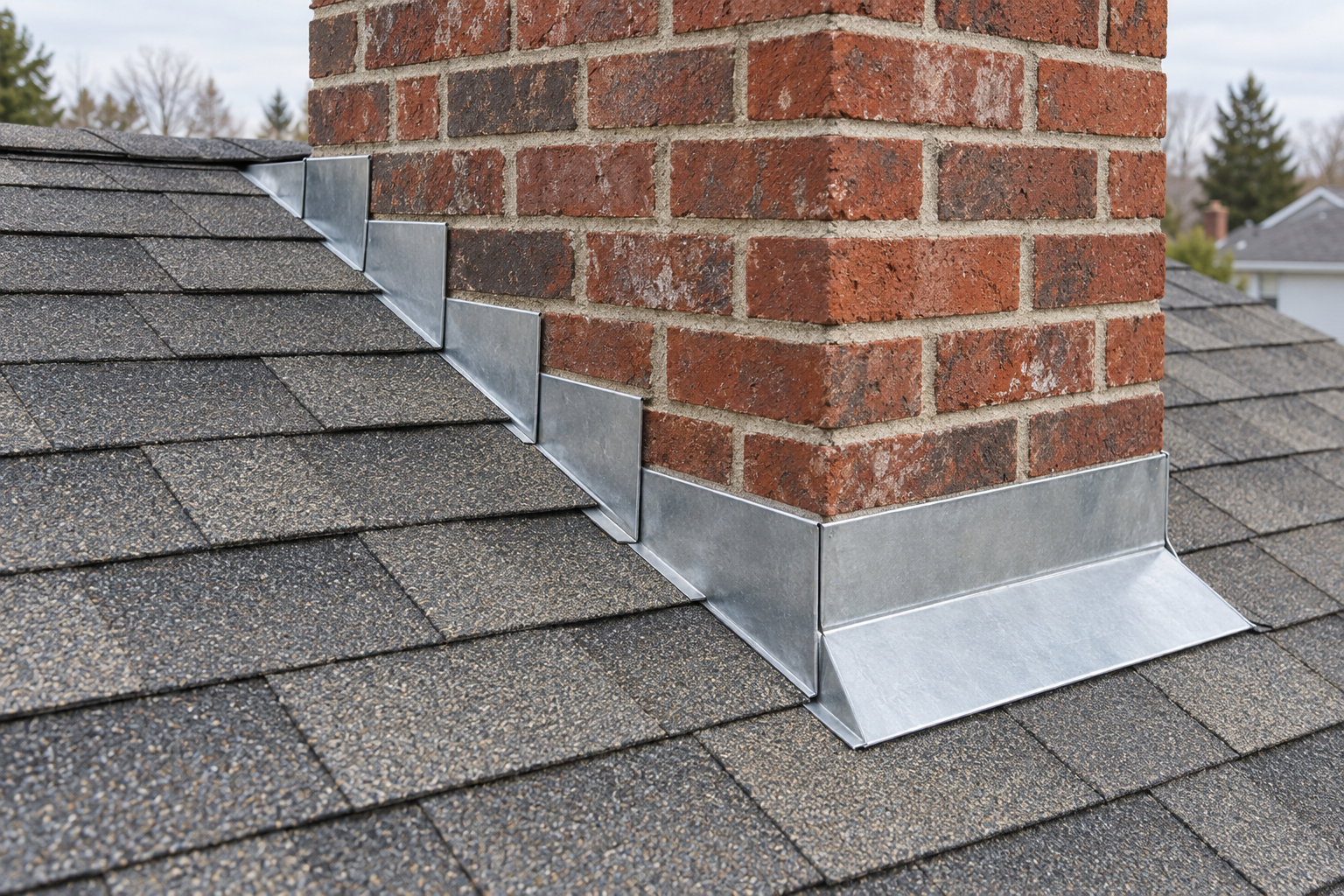
A skylight sheds water through the metal around its curb, and caulk cannot stand in for it. A chimney is the same: the metal stepped along its sides and lapped down over the brick does the work, and a bead of sealant on top only hides a gap for a while.
Michael did a great job for us. Met him randomly because he bought something from me on FB Marketplace, and then we got talking. Soon enough we were walking around on my roof and he gave me a very competitive quote. He was super professional and the roof is done right. I feel lucky to have found him!
From a neighbor
Flashing is detail work, and these are the promises we keep on every job, small repair or new roof:
Water at a wall, vent or chimney
Call and we will walk the roof, look at the metal at every joint, tell you what failed and quote the whole job before we start.
Monday to Saturday, from first thing in the morning until six in the evening. Calls outside those hours go to voicemail and we return them the next working morning.